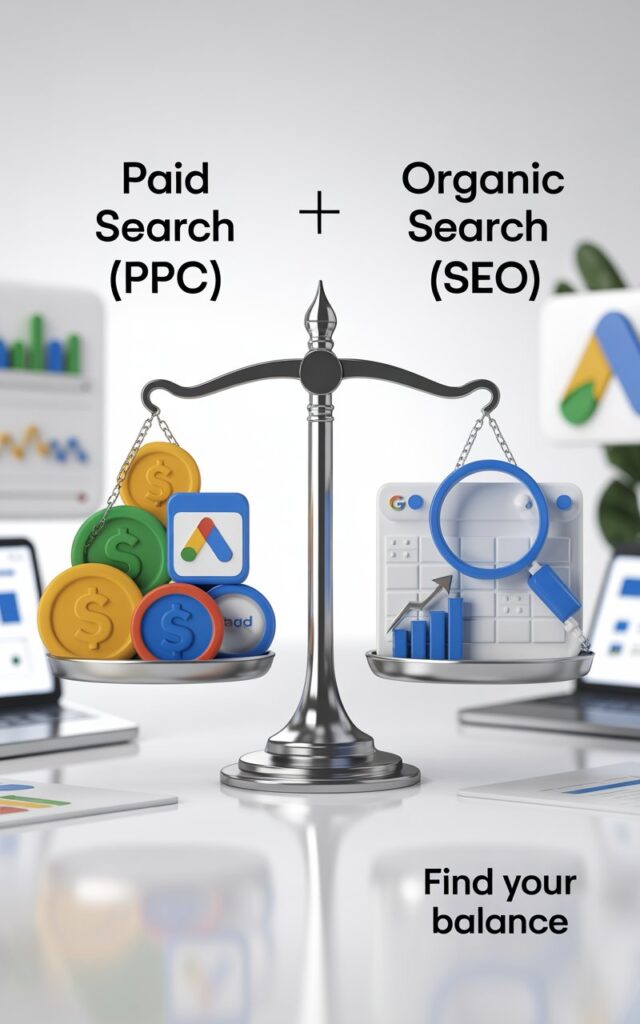
One of the biggest debates in digital marketing is the one over Paid vs Organic Search. On the one hand, there is the slow, steady, and reliable growth of organic search. On the other hand, the fast, targeted, and strong effectiveness of paid ads. So, which one is the best for your business? The reality, however, is not just “either/or.” The most successful digital strategies are not based on a single pillar, but rather on the balanced and integrated approach that combines the unique features of two.
Here is a comparison between the advantages of each strategy and, most importantly, the ways that you could use to make them work in tandem.
What Is Organic Search?
Organic search stands for the unpaid results that appear on a search engine results page (SERP). Imagine the “10 best hiking trails” blog post that pops up when you type in the name of a new place to hike. The primary way of getting a first-class position in organic results is through the process of Search Engine Optimization (SEO). It also involves a variety of actions such as:
Keyword Research: Finding the words and phrases your potential customer is.
Content Creation: Producing content that can be used for searching solutions with the highest quality, relevance, and use.
On-Page SEO: Fixing up the technical side of your website like meta descriptions, titles, and site speed.
Link Building: Getting links from other reputable websites to raise your rank.
The Pros of Organic Search
Trust and Credibility: People most of the time consider organic results more reliable and authoritative because the rankings are awarded, not bought.
Long-Term ROI: When you get high SEO, your content can continue to attract free visitors without paying for ads for months or years.
Cost-Effectiveness: The long-term cost per click is practically free although some activities are required upfront (for example, content creation and tools usage).
Sustainable Growth: SEO really solidifies your brand foundation, allowing you to gain and keep a good standing with the public over time.
The Cons of Organic Search
Time-Consuming: The road to a high organic rank is long and requires a lot of effort. It is a “slow burn” strategy.
Algorithm Changes: Search engines are always upgrading their algorithms, and sometimes these upgrades lower your ranks and require you to adjust your plans.
Intense Competition: It is almost impossible to get ranked for highly competitive keywords if there are already many companies are working in that market.
Paid vs Organic Search: What Is Paid Search?
Paid search, or Pay-Per-Click (PPC) advertising, is a scheme in which a company pays a search engine (like Google or Bing) to put their ad at the top or bottom of the SERP. These ads typically feature an icon marked “Sponsored” or “Ad”. You bid on keywords, and you only pay when a user clicks on your ad.
The Pros of Paid Search
The Pros of Paid Search
Instant Visibility: Paid ads provide a business or promotion with a spot on the first page of search results straight away, this is very convenient for time-sensitive offers or new companies.
Precise Targeting: You are capable of targeting specific demographics, locations, devices, or even the time of day, which gives you the exact control of your advertisement pool.
Measurable Results: PPC programs have comprehensive analytics that allow you to monitor your impressions, clicks, conversions, and ROI easily and quickly.
Flexibility and Speed: You have the option to try different keywords, ad copy, and landing pages rapidly, and to adjust your on-the-go campaign depending on the result you get.
The Cons of Paid Search
Ongoing Cost: As soon as you cease paying your ads disappear. Also, the cost per click can be high for competitive keywords.
Less Credibility: A number of users who consciously ignore the paid ads specifically what they want to get organic results set.
Dependency: Companies may become dependent on paid ads for web traffic, thus they will be the first to be seriously affected when the budget has to be cut or when rival competition gets tougher.
Lorem ipsum dolor sit amet, consectetur adipiscing elit. Ut elit tellus, luctus nec ullamcorper mattis, pulvinar dapibus leo.
Finding the Right Balance: The Synergy of Both
You get the most benefit from search when you no longer consider paid and organic search as antagonists but rather as partners in crime. This is how you can conjure up a strategy that is not only in harmony but also dynamic:
1. Use Paid Search to Inform Your Organic Strategy
PPC is an ideal way for you to test different ideas. Try out a paid campaign to compare the effectiveness of various keywords and ad copy in a short time. High click-through rate and conversions will tell you that the keyword is worth focusing on in your SEO content planning. Chiefly relying on statistics will actually spare you a lot of time and money as you will be investing in the content whose keywords you have already verified to be successful.
2. Leverage Paid Ads for Competitive or “Hard-to-Rank” Keywords
There are some keywords you will never be able to rank for organically due to their high competitiveness especially if the competition is the big guys. So, rather than exhausting yourself with just getting ranked, get your paid ads to do the work for you and let the ad bring in quick visibility for the terms that are high in both value and competition.
3. Use Paid to Boost New or Time-Sensitive Content
SEO can never be very quick. In cases such as a new product release, a time-limited offer, or a seasonal campaign, you obviously cannot rely on organic rankings as they will take their time to move upward. To get instant targeted traffic to your new article or landing page, initiate a paid campaign where the traffic can be directed.
4. Dominate the SERP with a Blended Strategy
If besides a paid ad, an organic top-ranking result by your company is also exhibited to a person searching for your brand or a relevant term, the user gets the feeling of authority and trustworthiness. The “one-two punch” does not only increase your visibility and brand trust, but as it occupies more real estate on the page, it also makes it harder for your competitors to be noticed.
5. Fill the Gaps in Your Funnel
Organic search is effective in cases when users are in the awareness or research stage of the buyer's journey (e.g., “what is a CRM?”). Because it happens very quickly and is very targeted, paid search is perfect to grab users who are at the point of purchase (e.g., “best CRM software pricing”). With the use of the combined strategy, you will be talking to the potential buyers who are at different stages of the decision-making process.
Final Thoughts
Paid and organic search are not in conflict with each other; instead, they complement each other as two sides of the same coin. The integrated search engine marketing approach identifies the individual advantages of each and merges them to be successful not only at hitting short-term targets but also at achieving long-term sustainable growth. When you take business goals as the starting point, map the audience, and let the data lead the way then, crushing it at ROI will become second nature to you while also making your internet presence truly swell and lathers resilient against any or sometimes unexpected lows.